
Categories
Home Buyers, Mansfield & Richland County Real EstatePublished August 7, 2026
How Home Buying Really Works in Mansfield Ohio, Step by Step

Deciding to buy a home is the first step. Of many.
Then there’s knowing where to begin or what to expect throughout the process, not to mention the pitfalls when you’re navigating a home purchase for the first time.
Just recently, I came across a breakdown from Sharran Srivatsaa, a real estate strategist who's overseen more than 200,000 transactions and bought over 3,500 homes himself.
One point he made stuck with me:
Most of the mistakes buyers make happen before they ever set foot in a house.
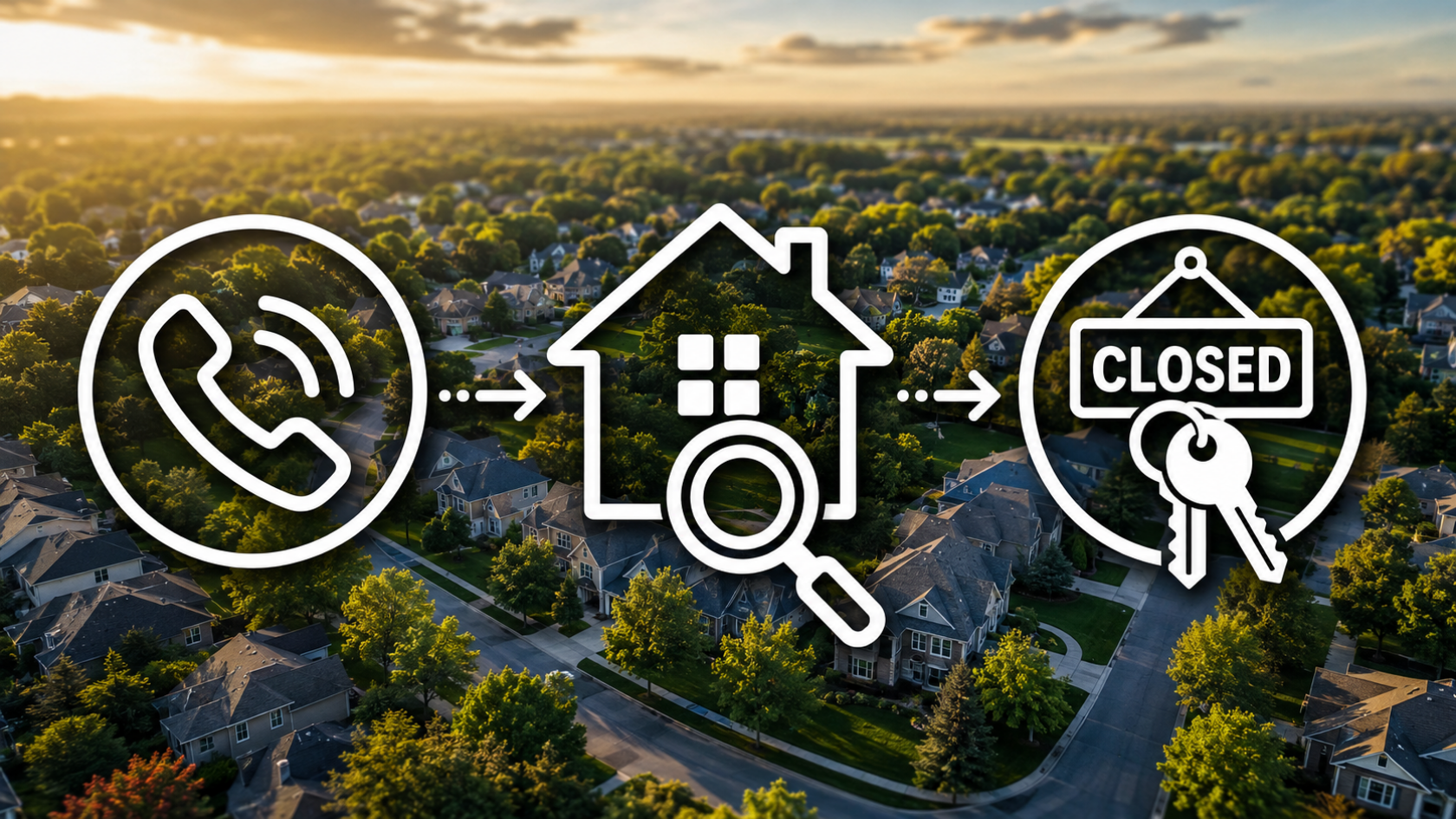
He mapped the whole process into 12 steps, and those steps fall into four stages:
- Strategy
- Search
- Contract
- Close
Here's what each one looks like if you're buying a home in Mansfield Ohio.
Before You Look at a Single Home, Build a Game Plan
The most important work happens before you tour anything. Srivatsaa breaks a real game plan into five pieces.
- What's actually driving the move? Most of the time it comes down to what he calls the 5 Ds: diamonds, diapers, divorce, downsizing, or death.
- What you don’t want, plus the 3-5 must-haves. Those are your non-negotiables.
- Your nice-to-haves. Mixing this in with your non-negotiables just muddies the search.
- The 7/10 rule. Decide upfront whether you'd rather have the 10/10 house and the 7/10 location, or vice-versa.
- Which deadlines are locked in, like a lease ending, and which ones have room to move, like new furniture or a future renovation.
Money is usually the part people stress about most, and it settles fast once you answer two questions:
- Are you thinking in terms of purchase price or monthly payment
- Are you paying cash or financing?
Cash removes the lender from the equation, which makes your offer look stronger to a seller and gets you to the closing table faster.
Financing takes a few more steps, but it keeps more of your cash free for everything else.
Choosing an Agent and Getting Preapproved
Once you've got a game plan, the next move is finding the right agent. Srivatsaa's advice here is to start with a referral from someone you trust, then look for an agent who specializes in the area you're buying into.
When you sit down with an agent you're considering, ask them three things:
- What's your process for helping clients buy a home?
- What are the top five mistakes buyers are making in this market right now?
- How do you get paid?
The answers tell you a lot fast. An agent without a clear process is going to leave you guessing at every step, and if they can't explain their own compensation clearly, that tells you something about how adept they’ll be when it comes to negotiating on price and other terms.
Once you've picked someone, get preapproved before you look at a single home. Preapproval locks in your financial picture, and it needs to stay locked until closing.
That means holding off on anything that could change that picture until the deal is done:
- New car
- Job change
- New credit card or payment plan (for anything)
Any one of those can throw off your approval right when you need it most.
What’s for Sale in Mansfield and Richland County
Behind what's actively listed for sale, there's a layer of passive inventory, homes that would sell if the conditions were right, even though they're not on the market yet.
In some places that passive inventory runs ten times the size of what's actually listed, and a good agent can get you into some of it through off-market deals and pocket listings most buyers never even hear about.
Before you start touring, talk to your agent about months of supply. That one number tells you how long it would take to sell everything currently on the market if nothing new came up for sale.
- Under 5 months, and it's a seller's market.
- 5 to 6 months, and the market is balanced.
- Over 6 months, and buyers have the advantage.
Local data for Mansfield Ohio shows we’re at 1.2 months of inventory, making us a seller’s market.
That number also shapes how a seller prices their home. A seller might price above what similar homes nearby have recently sold for (aspirational) to leave room for negotiating, or price right where similar homes are closing (perceived market value} to reflect real market value.
Sometimes a seller prices deliberately low (event pricing) to create competition and spark a bidding war.
Whichever one they're using changes how you should approach your own offer.
Touring Homes, Writing an Offer, and Getting Through Contract
After every showing, ask three questions:
- What pricing strategy is the seller using?
- Do you see yourself living here?
- What's the one thing you'd change before making an offer?
Srivatsaa calls that last question the most important one, and it's easy to see why. Most buyers walk away from a home over something small and fixable, like a paint color or an outdated light fixture.
Naming the one change you'd make before writing an offer can save a house that would've gotten crossed off the list and forgotten when it might otherwise be a great fit.
When you're ready to write an offer, your agent handles three things.
- They draft it.
- They walk you through every term before you sign anything.
- They submit and negotiate it on your behalf.
Once it's in, the seller can accept, reject, or counter it. Rejection is normal and usually comes with feedback you can use.
Countering is the most common response, whether that means a higher price or the seller wanting some sort of trade-off (for example, maybe they want to keep the washer and dryer)
Once an offer's accepted, the home goes under contract, and this is where buyers start to get nervous. Srivatsaa points to three built-in outs that exist for exactly this stage.
- The inspection contingency lets you walk away over a real problem the inspector finds, and it's also where requests for repairs come from.
- The loan contingency protects you if your financing falls through.
- The appraisal contingency confirms the home's value matches what you agreed to pay, and gives you two more chances to renegotiate if the number comes in low.
Buyers who understand what these three are for tend to stay a lot calmer through the rest of the contract period. These outs exist so you're not stuck if something goes wrong.
The Final 48 Hours: What Closing Day Really Looks Like
There's real planning to do before closing day shows up.
- Handle your address change.
- Get the utilities switched over at the new place.
- Lock down your moving logistics early so you're not scrambling in the last week.
Then comes the final walkthrough, which confirms two things: the home's in the same shape it was in when you made your offer, and whatever repairs the seller agreed to got done.
Srivatsaa describes the last 48 hours as “financially intense,” and he’s not saying that to be dramatic. Documents get signed, funds move, and keys change hands, all in a pretty short window. When things move that fast, it’s normal for it to feel overwhelming.
This is where having an agent who's done this before really pays off. Catching a problem before closing day is a lot easier than catching it afterwards.
None of this has to feel like guesswork once you know what's coming at each stage.
Ready to put real numbers behind the homebuying steps? Use the free Buyer Payment Planner to estimate your payment, ownership costs, and cash target before you start touring homes in Mansfield or Richland County.

Justin Bigelow
Realtor® | Justin Bigelow, Realtor | Dream Huge Realty
or another way